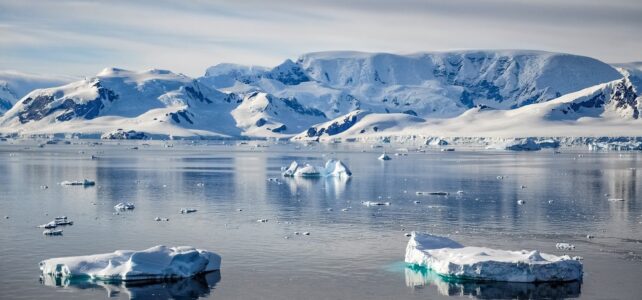
The names we assign to geographical elements are never the result of chance. They often carry a historical and etymological weight that reflects the evolution of human knowledge and terrestrial explorations. The Arctic Ocean and the Antarctic continent are no exception. These two terms, although geographically opposed, share a common origin in the way they have been named and studied. Understanding this nomenclature allows for a better grasp of the history of geographical discoveries and the importance of these regions in our contemporary world. Why do we speak of the Arctic Ocean and the Antarctic continent?
Etymological Origins of the Terms Arctic and Antarctic
The names Arctic and Antarctic find their roots in ancient Greek. These terms are not just geographical designations, but also linguistic testimonies from our ancestors.
- The term Arctic comes from the Greek word arktos, meaning bear. This name refers to the constellation of Ursa Major, located in the northern hemisphere. This constellation, visible from the northern polar regions, has served as a landmark for navigators and explorers.
- The Antarctic, on the other hand, derives from the Greek word antarktikos, meaning opposite to the Arctic. The prefix anti indicates an opposition or a direct geographical contrast to the Arctic, thus placing the Antarctic in the southern hemisphere.
The Arctic Ocean: A Unique Body of Water
The Arctic Ocean, although often perceived as a vast frozen expanse, possesses characteristics that distinguish it from other oceans on the globe. It is a unique environment, rich in biodiversity and natural resources.
The surface of the Arctic Ocean is mostly covered by sea ice, the thickness of which varies with the seasons. This ice plays a crucial role in regulating the global climate by reflecting a significant portion of solar rays. Moreover, the Arctic Ocean is home to exceptional wildlife, including polar bears, seals, walruses, and various species of fish adapted to cold waters. Indigenous peoples, such as the Inuit, have depended on this environment for their livelihood for millennia.
The Antarctic Continent: An Uninhabitable Ice Desert
In contrast to the Arctic Ocean, Antarctica is a massive continent, almost entirely covered by an ice sheet. This ice desert is the coldest place on the planet, with temperatures dropping as low as -89.2°C.
The Antarctic continent is also characterized by its extreme isolation and harsh climatic conditions. Despite these conditions, it is home to unique biodiversity, including colonies of penguins, seals, and various species of seabirds. Scientific research there is crucial for understanding climate change and terrestrial geophysical processes. An Antarctic cruise offers a rare opportunity to observe these phenomena up close and to better understand the dynamics of this mysterious continent.
Scientific and Geopolitical Importance of the Polar Regions
The Arctic and Antarctic regions are not just geographical curiosities; they play a crucial role in global ecological and geopolitical balances.
- Climate Regulation: The polar regions act as refrigerators for the Earth, influencing ocean currents and global weather systems.
- Natural Resources: Mineral and energy resources attract the attention of nations. The Arctic, for example, is rich in oil, natural gas, and rare minerals.
- Scientific Research: These regions provide a wealth of data for scientists. Antarctica, in particular, is a natural laboratory for studying climate change and atmospheric phenomena.
- Geopolitics: Sovereignty and resource management in the Arctic are increasingly controversial issues. Several countries claim portions of this region, heightening geopolitical tensions.
The terms Arctic and Antarctic are not just geographical designations. They reflect a rich and complex history of discoveries, research, and geopolitical rivalries. Understanding the reason behind these names provides a deeper perspective on the importance of these regions for humanity and the planet. Whether it is the unique wildlife, abundant natural resources, or critical climatic phenomena, the Arctic and Antarctic will continue to captivate and influence the world for generations to come.