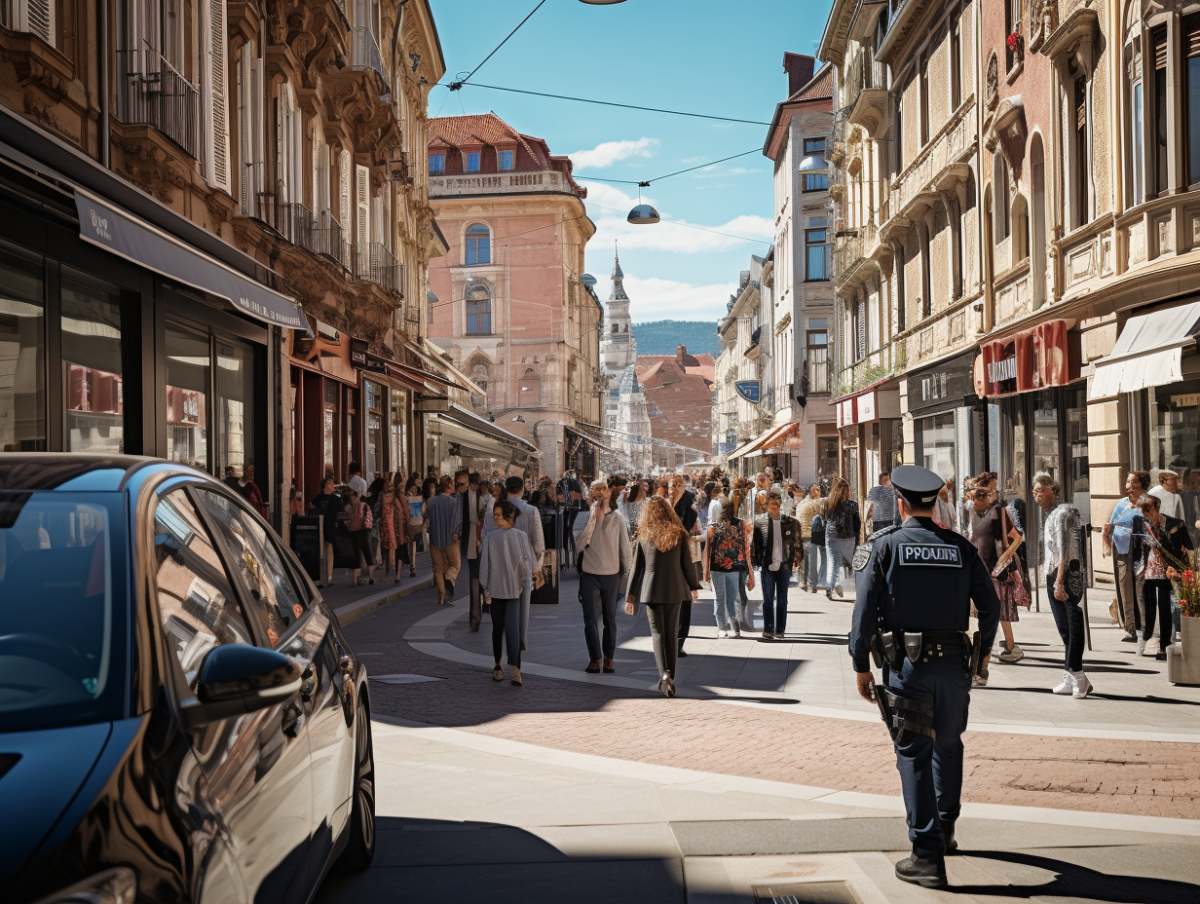
In Lyon, urban safety is a constant concern, particularly in neighborhoods classified as sensitive areas. These sectors, often marked by high density and socio-economic challenges, require special attention from the authorities. Delinquency, drug trafficking, and vandalism are persistent problems there. Efforts to restore safety and improve the living environment for residents include prevention measures, increased police presence, and community initiatives. The city hall and the prefecture collaborate to identify the most effective strategies to pacify these spaces and strengthen the sense of security among Lyon residents.
Analysis of Safety in Lyon’s Neighborhoods
In the urban context of Lyon, safety is a theme that raises questions, mobilizes, and sometimes divides. The city of Lyon, with its various districts and neighborhoods, displays nuances of safety ranging from tranquil areas to hot neighborhoods in Lyon. Urban safety is reflected in statistics but also in residents’ perceptions and law enforcement interventions.
The 7th arrondissement of Lyon, along with its neighbors the 8th and 9th, stands out for its high sensitivity. Data from the prefecture highlight a concentration of criminal acts in these areas, indicating a need for enhanced control and police presence. The adjacent ZUS urban zones, although benefiting from improved public lighting, remain points of vigilance for the authorities.
As for Croix-Rousse, its attractiveness, bolstered by a lively nightlife, comes with specific challenges. Place Louis Pradel and the slopes of Croix-Rousse are spaces where surveillance must be adapted to the flow of night owls and commercial activities. Social diversity and cultural events provide an opportunity for imaginative and respectful security measures that honor the neighborhood’s diversity.
On the outskirts, cities like Vaulx-en-Velin and Villeurbanne exhibit a low safety rate, contrasting with municipalities like Tassin-la-Demi-Lune or Sainte-Foy-lès-Lyon, known for their tranquility. Lyon’s positioning, compared to other urban centers like Paris, Marseille, or Bobigny, reveals a ranking in terms of danger that calls for both caution and action.

Measures and Initiatives to Improve Urban Safety
To address the challenges of urban safety in Lyon, a proactive city policy is being implemented. Grégory Doucet, the mayor of the metropolis, along with his deputy Sylvain Godinot, is committed to strengthening the municipal police force. This measure is part of a desire to ensure safety in public spaces, particularly in districts marked by heightened sensitivity.
Collaboration between municipal services and stakeholders in the Auvergne-Rhône-Alpes region is essential for optimal management of neighborhoods. Urban social cohesion contracts are thus developed to specifically address the needs of sensitive areas, with a focus on prevention and community integration. These contracts aim to promote social cohesion and prevent tensions through citizen initiatives and urban development projects.
Public lighting, a significant factor in the perception of safety, is undergoing a revamp in several neighborhoods. The choice of technologies and intelligent management of lighting prove to be tangible vectors for improving nighttime safety, in addition to contributing to urban aesthetics and reducing energy consumption.
The city policy extends beyond police action, with particular attention given to the public space and its appropriation by residents. Green spaces like the Parc de la Tête-d’Or, or meeting areas like the Presqu’île and Confluence, benefit from surveillance and animation measures aimed at making them safer and more welcoming, thus contributing to the quality of life and the safety of all.